Kitchen Damage Restoration From Inspection to Rebuild
Your kitchen may be affected by more than the damage you can see.
FreeKitchen.org helps homeowners inspect, document, repair, and reconstruct kitchens affected by leaks, water damage, mold-related issues, fire, smoke, or other property damage.
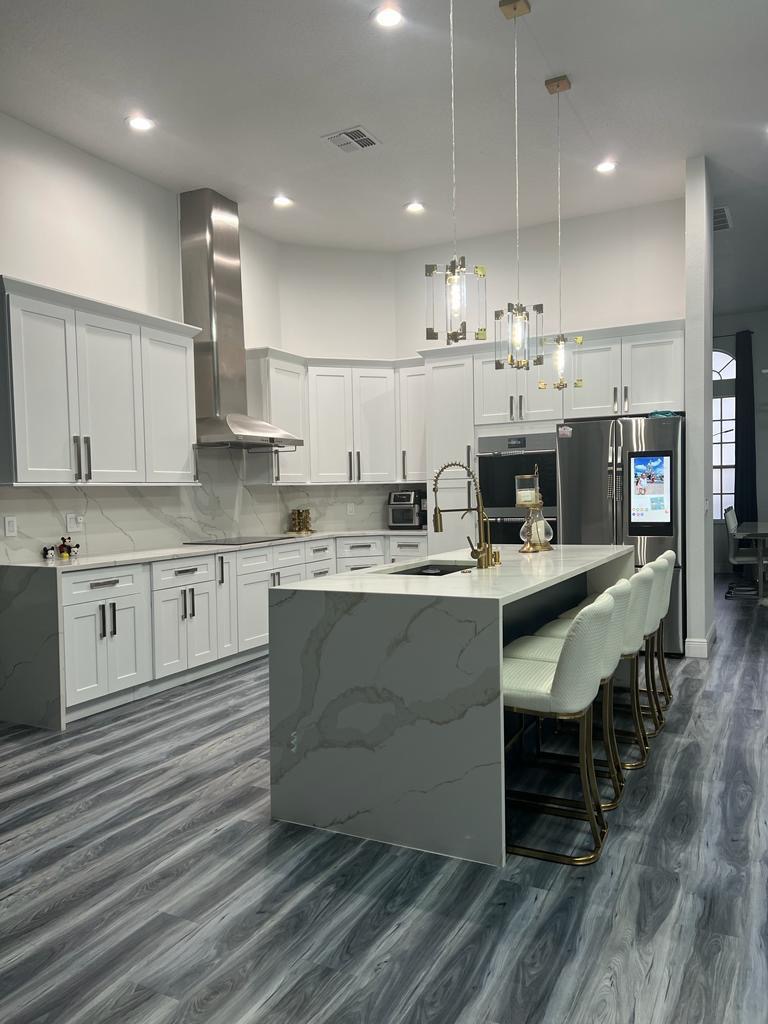
Complete Kitchen Restoration Services
Kitchen restoration is different from a cosmetic remodel. The first priority is identifying the affected areas, addressing the source of damage, removing materials that cannot be saved, and preparing the kitchen for safe reconstruction.
Once the affected area is ready, our team rebuilds the kitchen according to the approved project scope and selected finishes.
Kitchen Damage Inspection
We examine accessible kitchen areas for visible damage, moisture indicators, material deterioration, and other signs that additional work may be required.
Water Mitigation Coordination
When active water or elevated moisture is present, the affected areas must be stabilized and dried before reconstruction begins.
Damaged Material Removal
Cabinets, drywall, insulation, flooring, trim, and other materials may need to be removed when they cannot be safely or effectively restored.
Kitchen Reconstruction
We rebuild affected kitchen components, including cabinetry, countertops, walls, flooring, trim, paint, and related finishes.
Finish Selection
Homeowners can review available cabinet, countertop, flooring, backsplash, hardware, paint, and fixture options that fit the approved scope and project budget.
Final Walkthrough
We inspect the completed project with the homeowner and address remaining approved completion items.
Common Causes of Kitchen Damage
- Dishwasher supply-line leaks
- Dishwasher drainage failures
- Refrigerator water-line leaks
- Ice-maker line leaks
- Sink overflows
- Drainpipe leaks
- Garbage disposal leaks
- Broken pipes
- Supply-valve failures
- Leaks behind cabinets
- Water entering from an adjacent room
- Fire and smoke damage
- Storm-related water intrusion
- Long-term moisture discovered beneath flooring
- Accidental water discharge
Kitchen Materials Commonly Affected by Water
Cabinetry
Water can affect cabinet finishes, doors, boxes, shelves, toe kicks, hardware, and the surrounding wall area.
Flooring
Moisture may travel underneath tile, laminate, vinyl, engineered wood, hardwood, or other flooring materials.
Subflooring
Water that passes through the finished flooring may affect the subfloor and adjoining structural materials.
Drywall and Insulation
Moisture can enter walls behind cabinets, sinks, backsplashes, refrigerators, and dishwashers.
Countertops and Backsplashes
Countertops may need to be removed or reset when the cabinets supporting them are damaged or replaced.
Adjacent Rooms
Water originating in the kitchen may spread into dining rooms, hallways, living spaces, lower floors, or nearby walls.
Restoration First, Renovation Where It Makes Sense
The goal of a program-funded restoration project is normally to repair qualifying damage according to the approved scope.
Some homeowners also choose to make optional improvements during reconstruction. These may include different cabinet styles, upgraded countertops, a new backsplash, improved storage, updated lighting, or layout changes.
Optional upgrades that exceed the approved restoration scope may require an additional homeowner contribution.
Start With a Free Kitchen Inspection
Let us identify the visible damage, explain the restoration process, and help you determine the next appropriate step.